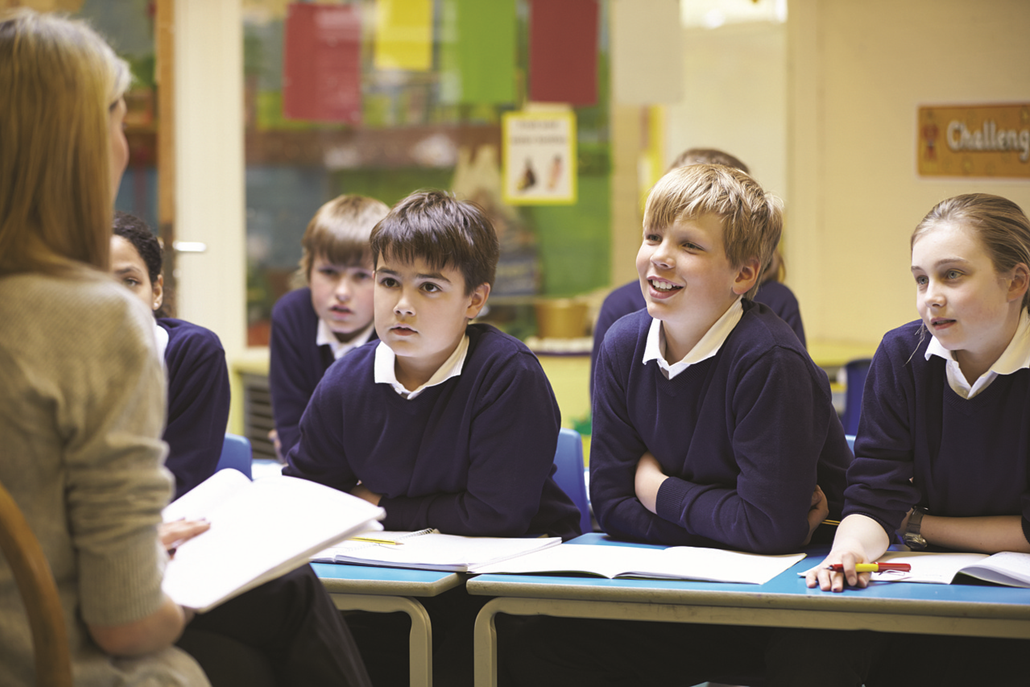

Keeping students interested in classroom lessons is one of the most persistent challenges educators face. Teachers must balance curriculum requirements, academic expectations, and the different learning needs of their students while creating an environment that encourages active participation. Although textbooks, lectures, and written assignments remain essential educational tools, incorporating familiar real-world topics can make lessons more relevant and enjoyable. News and entertainment quizzes offer teachers a practical way to introduce variety without sacrificing educational value.
Students encounter current events and popular culture almost every day. They hear about scientific discoveries, international developments, popular films, music, and television programs through conversations, digital platforms, and traditional media. These subjects naturally attract attention because they connect with experiences outside school. When teachers use them thoughtfully, familiar headlines and entertainment topics can become starting points for discussions involving history, geography, science, literature, economics, and cultural studies.
Interactive quizzes provide a structured way to bring these subjects into the classroom. Instead of simply asking students to read an article or watch a presentation, teachers can invite them to answer questions, compare responses, explain their reasoning, and investigate unfamiliar information. This approach encourages participation while giving educators an opportunity to assess existing knowledge. The goal is not merely to entertain students but to use enjoyable activities to support meaningful learning.
Why News and Entertainment Belong in the Classroom
Current events help students understand how academic concepts relate to real-world situations. A news report about renewable energy can reinforce science lessons, while a story about international trade can support economics and geography discussions. Entertainment topics offer similar opportunities. Historical films can introduce discussions about past events, popular songs can connect with language and cultural studies, and international cinema can expose learners to different traditions and perspectives. These connections help students recognize that education extends beyond the classroom.
One practical strategy is to begin a lesson with an interactive bingnews quiz that introduces several relevant headlines or developments. Teachers can ask students to answer a few questions individually before discussing the correct responses as a class. For example, a question about a recent scientific achievement might lead to a discussion about the research involved, while a question about an international event could introduce geographical and historical context. By connecting factual recall with guided discussion, educators can turn a brief quiz into a meaningful learning activity.
Entertainment offers another approach to making classroom discussions more accessible. Teachers can incorporate entertainment bingtrivia questions into lessons involving music, literature, cultural traditions, and media studies. A question about a film adaptation may encourage students to compare the movie with its original novel, while a question about international music can introduce the cultural background of different genres. When teachers connect familiar entertainment topics with clear learning objectives, students can explore academic concepts through subjects they already recognize.
1. Start Lessons With a Five-Minute News Warmup
The opening minutes of a classroom lesson can influence how students approach the rest of the session. A short news quiz provides an opportunity to activate prior knowledge, introduce important concepts, and establish a focused learning environment.
Teachers can select three to five questions related to the day’s lesson or an important development in the news.
For example, a geography class might begin with questions about countries recently mentioned in international reporting. Students could identify locations on a map, discuss neighboring countries, and explore geographical characteristics that influence economic or environmental conditions.
A science class could use a question about space exploration or medical research to introduce scientific concepts.
The activity does not need to become a competition. Students can answer independently, compare responses with a partner, or discuss possible answers in small groups.
After revealing the correct responses, teachers should encourage students to explain their reasoning.
Useful follow-up questions include:
- What information helped you choose your answer?
- Where might we verify this fact?
- How does the topic connect with our lesson?
- What additional questions does this news story raise?
These questions help transform a short warmup into an opportunity for analytical thinking.
For best results, educators should select age-appropriate developments and verify information before presenting questions to students.
2. Turn Popular Movies Into Educational Discussions
Movies can provide engaging introductions to historical events, literary works, scientific ideas, and cultural traditions.
Many films reference real locations, historical periods, technological developments, or social issues. However, entertainment productions often modify events for dramatic effect, making them useful subjects for critical comparison.
A teacher introducing a historical film might begin with questions about its setting, characters, or the period it portrays.
Students could then investigate which elements reflect documented history and which were changed or invented.
For example, a film depicting ancient civilizations might provide opportunities to discuss architecture, political institutions, religious traditions, and archaeological evidence.
Similarly, a science-fiction movie could introduce questions about space travel, artificial intelligence, or future technology.
The teacher might ask students to distinguish between scientific possibilities and fictional inventions.
This approach encourages learners to examine entertainment thoughtfully rather than assuming everything presented on screen is factually accurate.
It also reinforces the importance of comparing fictional representations with reliable educational sources.
3. Use Music Trivia to Explore History and Culture
Music is a familiar part of students’ everyday experiences, making it an accessible subject for classroom activities.
Different musical traditions reflect cultural identities, historical developments, artistic influences, and technological changes.
Teachers can use music-related quiz questions to introduce these connections.
For example, a lesson might begin with questions about the origins of jazz, the development of classical music, or the influence of traditional instruments on contemporary musical styles.
Students could investigate how historical events, migration, and cultural exchange contributed to the development of different genres.
A geography teacher might ask students to identify countries associated with particular musical traditions.
A language teacher could explore how songs use figurative language, storytelling, rhythm, and repetition.
Music quizzes can also introduce discussions about technological developments such as sound recording, radio broadcasting, and digital distribution.
However, educators should avoid assuming that all students share the same musical interests.
Including examples from different cultures and periods can create a more inclusive learning experience.
The objective is to use music as an introduction to broader knowledge rather than simply testing familiarity with popular performers.
4. Organize Group Trivia Challenges That Encourage Collaboration
Group activities can help students develop communication, cooperation, and problem-solving skills.
A classroom trivia challenge offers an opportunity to practice these abilities while reviewing academic information.
Teachers can divide students into small teams and provide questions covering current events, geography, science, history, and entertainment.
Instead of rewarding only the fastest response, educators can require teams to discuss their reasoning before submitting an answer.
This encourages students to explain their ideas, listen to other viewpoints, and reach conclusions collaboratively.
For example, a team might encounter a question about a country hosting an international cultural event.
One student may recognize the country’s name, while another knows its location or historical background.
By combining their knowledge, the group can arrive at a more informed response.
Teachers can improve the educational value of the activity by providing brief explanations after each question.
They should also establish guidelines that encourage respectful participation.
Competitive activities may motivate some students, but excessive emphasis on winning can discourage others.
An alternative is to reward thoughtful explanations, cooperation, and improvement rather than focusing exclusively on final scores.
5. Teach Media Literacy Through Real News Headlines
Students encounter news through different media platforms, including websites, television, social networks, and video-sharing services.
Not all information appearing on these platforms is equally reliable.
Some reports are supported by original evidence and careful verification, while others contain misleading claims, outdated details, or incomplete context.
Teachers can use news quizzes as starting points for media literacy lessons.
For example, students might answer a question about a scientific discovery and then examine how different publications reported the development.
The class could compare headlines, identify original sources, and discuss whether the articles accurately represent the available evidence.
Another activity could involve presenting students with a mixture of factual statements, opinions, and predictions.
Students would identify the type of claim and explain what evidence would be necessary to verify it.
Important discussion questions include:
- Who originally reported the information?
- What evidence supports the claim?
- Does the headline accurately reflect the article?
- Are important details missing?
- Can the information be verified through another credible source?
These activities encourage students to become more thoughtful consumers of information.
Media literacy lessons should also help learners recognize uncertainty.
A report describing preliminary research findings should not automatically be interpreted as proof that a particular conclusion applies universally.
By discussing such distinctions, teachers can help students evaluate information more carefully.
6. Connect Entertainment Trivia With Geography
Popular culture frequently crosses national borders.
Films, television programs, music, and international festivals can introduce students to countries and regions they may not otherwise encounter in their studies.
Teachers can use entertainment trivia to make geography lessons more engaging.
For example, a question about a film produced in Japan could lead to a discussion about Japanese geography, urban development, and cultural traditions.
A question about an international music festival might encourage students to locate the host city on a map and investigate its regional characteristics.
Teachers can extend the activity by asking students to create simple country profiles.
Each profile might include:
- The country’s location and neighboring nations.
- Its capital and major cities.
- Important geographical features.
- Languages and cultural traditions.
- Notable contributions to international entertainment.
This activity combines research, geography, cultural awareness, and communication skills.
It can also encourage students to recognize that popular culture is influenced by local traditions and historical circumstances.
However, teachers should avoid presenting individual entertainment productions as complete representations of a country’s culture.
Students should learn to appreciate cultural diversity while recognizing that no single film, song, or celebrity represents an entire society.
7. Use Student-Created Quizzes to Develop Research Skills
Teachers do not need to design every classroom quiz themselves.
Allowing students to create questions can turn a simple activity into a research and writing assignment.
Students must first identify a suitable topic, gather reliable information, and determine which facts are important.
They then need to construct clear questions and develop answer choices.
Creating effective multiple-choice questions requires more thought than simply writing down a correct answer.
Students must consider whether their wording is understandable, whether only one option is correct, and whether the alternative choices are plausible.
For example, a student researching a recent scientific mission might write a question asking which organization launched it.
To complete the activity responsibly, the student would need to verify the information using a credible source.
The teacher could also ask students to provide a short explanation supporting each correct answer.
This encourages research, factual accuracy, and concise communication.
After completing their quizzes, students can exchange questions with classmates and provide constructive feedback.
The exercise helps learners appreciate that producing educational materials involves careful selection and verification of information.
8. Make Quiz Questions the Beginning of Deeper Conversations
A correct answer should not always mark the end of a classroom activity.
In many cases, it can provide the starting point for a more meaningful discussion.
Consider a quiz question asking students to identify a country involved in a major environmental initiative.
Once the answer is revealed, the teacher could ask why the initiative was introduced, what challenges it addresses, and how its outcomes might be evaluated.
Similarly, a question about a historical film might lead students to discuss how filmmakers interpret past events and why certain perspectives receive greater attention.
This approach encourages students to move from factual recall toward explanation and analysis.
Teachers can use several follow-up strategies.
Ask students to explain their reasoning. Learners should describe the information or assumptions that influenced their answers.
Encourage comparison. Students can compare related events, historical periods, or cultural developments.
Introduce evidence. Provide reliable sources that support or challenge initial interpretations.
Invite additional questions. Students can identify aspects of the topic they want to investigate further.
Connect the discussion to academic concepts. Teachers should relate the activity to established curriculum objectives.
These strategies help ensure that quizzes contribute to meaningful learning rather than becoming isolated entertainment exercises.
9. Adapt Quiz Activities for Different Learning Needs
Students have different educational backgrounds, interests, abilities, and levels of confidence.
An effective classroom activity should consider these differences.
Some learners may enjoy fast-paced competitions, while others perform better when given additional time to think.
Teachers can make quiz activities more inclusive by offering different participation formats.
For example, students could answer independently before joining a group discussion.
This allows everyone an opportunity to consider the question without immediately being influenced by more outspoken classmates.
Read More: The Credential That Changes Everything – Why Teacher Accreditation Matters More Than Ever?
Teachers can also provide written questions, visual materials, and accessible digital formats.
When questions involve unfamiliar vocabulary, brief explanations may help students focus on the intended learning objective rather than struggling with unnecessary language barriers.
Difficulty should also be appropriate.
Questions that are too easy may provide little educational challenge, while consistently difficult questions can discourage participation.
A useful approach is to combine straightforward recall questions with more demanding items that require interpretation or reasoning.
Teachers should remember that entertainment knowledge varies widely among students.
A learner unfamiliar with a particular television series should not be treated as academically weaker because they cannot answer questions about it.
The activity should provide opportunities to learn, not merely reward existing familiarity with popular culture.
10. Build a Weekly Classroom Quiz Routine
Integrating quizzes into classroom instruction does not require major curriculum changes.
Short, carefully selected activities can complement existing lessons.
A weekly routine can introduce variety while reinforcing academic objectives.
| Day | Quiz activity | Educational focus |
| Monday | News headline warmup | Current affairs and general awareness |
| Tuesday | Entertainment and culture trivia | History, literature, and cultural studies |
| Wednesday | Team knowledge challenge | Collaboration and communication |
| Thursday | Media literacy quiz | Source evaluation and critical thinking |
| Friday | Student-created quiz | Research and knowledge application |
This schedule is only an example.
Teachers can modify it according to available classroom time, subject requirements, and student needs.
The routine should also include opportunities to review previously discussed topics.
Revisiting information after several days can support long-term retention more effectively than concentrating all practice into one session.
It is equally important to allow time for explanation and reflection.
A five-question quiz followed by a thoughtful discussion may provide more educational value than a much longer activity completed without feedback.
11. Evaluate Learning Beyond Correct Answers
Quiz scores are useful indicators of performance, but they do not provide a complete picture of student understanding.
A student may answer a question correctly through guesswork.
Another may select the wrong option while demonstrating a reasonable understanding of the underlying concept.
Teachers should therefore consider additional evidence when evaluating learning.
For example, students could write brief explanations of their answers or summarize what they learned from unfamiliar questions.
Group discussions can reveal whether learners understand relationships between concepts.
Research assignments can demonstrate whether students can locate and interpret reliable information independently.
Teachers might also ask students to identify one misconception they corrected during the activity.
This encourages reflection and helps learners recognize progress beyond numerical scores.
When quizzes are used as formative assessments, their primary purpose should be to guide learning and identify areas requiring additional instruction.
12. Avoid Common Mistakes When Using Quizzes in the Classroom
Although quiz activities can be engaging, poor implementation may reduce their educational value.
One common mistake is choosing questions based only on entertainment appeal.
A question about a famous celebrity may attract attention, but it should have a meaningful connection to the lesson if instructional time is being devoted to it.
Another mistake is relying on outdated information.
Current affairs questions should be reviewed carefully because developments can change rapidly.
Teachers should also avoid ambiguous questions with multiple defensible answers.
Clear wording and accurate explanations are essential for maintaining students’ trust in the activity.
Excessive competition can create additional challenges.
If the emphasis remains entirely on speed and winning, students may prioritize guessing over understanding.
Educators can address this by allowing adequate response time and rewarding thoughtful participation.
Finally, quizzes should not replace reading, writing, practical exercises, or sustained discussion.
They work best as one component of a broader instructional approach.
The goal is to strengthen learning through variety, not to substitute entertainment for academic depth.
13. Helping Students Develop Curiosity Beyond School
One of the lasting benefits of educational quizzes is their potential to inspire independent exploration.
A question about an ancient civilization may encourage a student to read about archaeology.
A question about a scientific breakthrough might introduce an interest in research or engineering.
Similarly, an entertainment question involving an international film could spark curiosity about another country’s language, history, or artistic traditions.
These interests can extend beyond a single classroom lesson.
Teachers can encourage further learning by allowing students to select topics for short presentations, independent research, or classroom discussions.
Read More: The First 10 Minutes of an English Lesson: Why They Matter More Than Teachers Realise
Students might also maintain a learning journal containing unfamiliar facts, interesting discoveries, and questions they would like to investigate.
The journal does not need to be complicated.
A simple entry could contain the original question, the correct answer, an explanation, and one additional fact discovered through research.
Over time, these entries provide a record of growing knowledge and developing interests.
The purpose is to help students recognize that learning is not limited to completing assignments or preparing for examinations.
Curiosity can become a lifelong habit when learners discover that ordinary experiences offer opportunities to understand the world more deeply.
Conclusion: Making Learning Relevant, Interactive, and Meaningful
News and entertainment quizzes can help teachers introduce familiar topics into academic lessons while encouraging participation, curiosity, and knowledge development.
Current events connect classroom subjects with real-world developments. Entertainment topics provide accessible introductions to history, culture, literature, geography, and technology. When combined with thoughtful questions and reliable explanations, these activities can make lessons more relevant to students’ experiences.
However, their greatest value comes from what happens after students answer a question.
Teachers can encourage learners to explain their reasoning, examine evidence, discuss different perspectives, and investigate unfamiliar subjects.
These activities help students develop skills that extend beyond memorizing facts.
Effective classroom quizzes should support clear learning objectives, accommodate different learners, and complement established teaching methods.
By combining interactive questions with reading, discussion, research, and reflection, educators can create learning experiences that are both engaging and intellectually meaningful.
Ultimately, the best educational quiz does more than entertain a classroom or produce a high score. It encourages students to ask better questions, explore new ideas, and discover that learning can be an enjoyable and continuing part of everyday life.